
Buying Soapstone in Bulk from Pakistan: A Step-by-Step Buyer’s Guide
Finding sellers is rarely the hard part for buyers who want to buy soapstone from Pakistan in bulk. The real challenge is making sure the material that arrives matches what was agreed, in the right form, with documents that clear customs. This guide walks through the purchase in the order it actually happens, from defining your requirement to inspecting the cargo on arrival, and highlights the points where bulk orders most often go wrong.
Step 1: Define Exactly What You Need to Buy
“Soapstone” is not a single product. The U.S. Geological Survey describes soapstone as an impure massive variety of talcose rock, while commercial talc usually refers to a purer material suited to processing. The distinction matters: a buyer who needs fine white powder for a paint or plastics formulation will not be satisfied with carving-grade stone, and the reverse is equally true.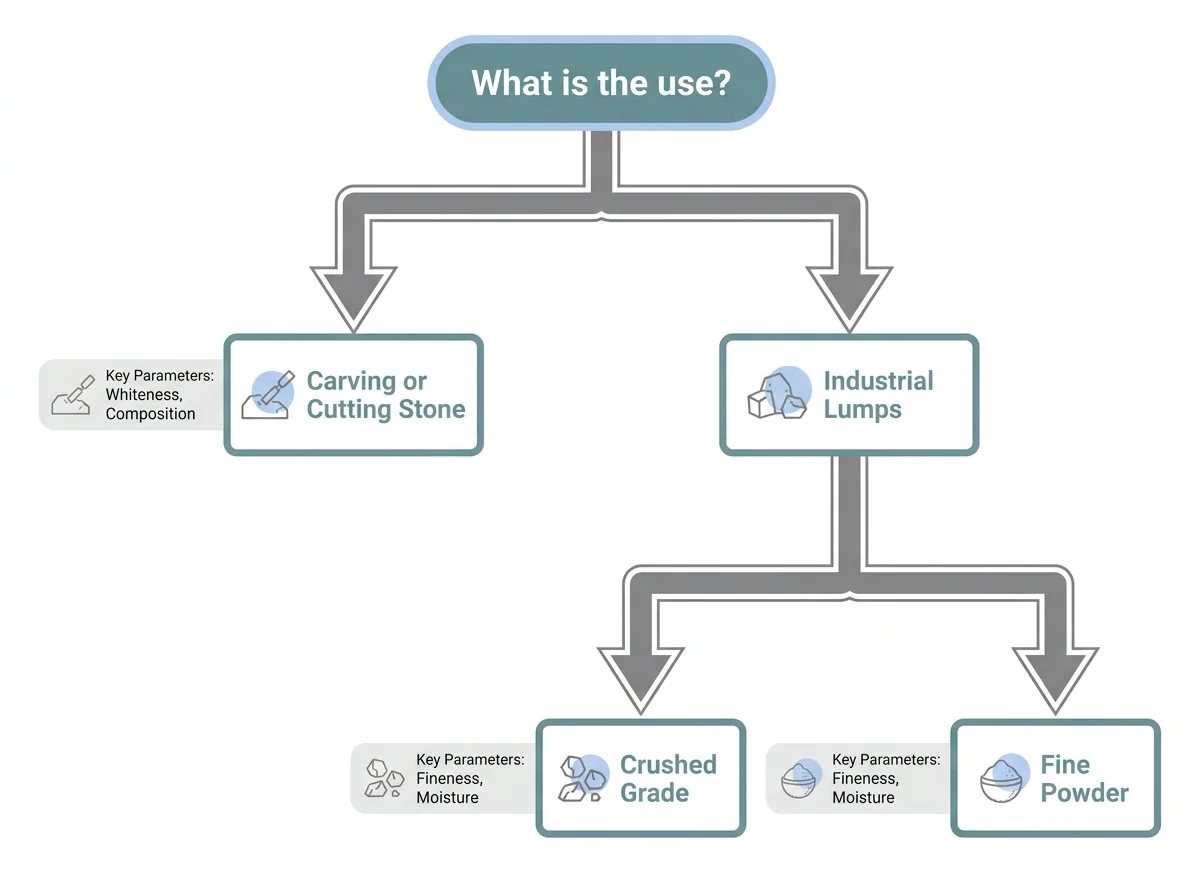
Write down the intended use, the form (lump, crushed or powder) and the properties that matter most. Daa Minerals says it reviews soapstone and talc by colour, whiteness, composition, impurities, moisture and buyer-defined fineness, which makes a useful template for your own checklist.
Step 2: Turn Quality Claims into a Written Specification
Terms such as “premium” or “A grade” mean whatever the seller decides they mean. Convert them into measurable limits.
Item | What to specify |
Form and size | Lump, crushed or powder, with a size range or sieve limit |
Colour or whiteness | Target value and measurement method |
Composition | Required chemistry and limits for impurities |
Moisture | Maximum percentage |
Cleanliness | Limits on visible grit, rock fragments or staining |
Packaging | Bag type, weight, marking and loading method |
Evidence | Test method and independent laboratory report |
Step 3: Understand the Types of Supplier Before You Choose
Source-linked producers know the deposit, processors offer prepared grades, traders can pool volume, and export coordinators connect your requirement with sources, preparation partners, testing providers and logistics. Daa Minerals Limited describes the last model: requirement review, sourcing, preparation coordination, packaging, documentation and shipment support within a written scope. It also states that availability, grade and timing depend on source review and written agreement, and that final technical suitability remains with the buyer.
Put the same questions to every supplier. Who owns, prepares and ships the material? Where does it come from, and will that source remain stable? Which laboratory produced the reports, and by what method? Clear, written answers are a good sign.
Step 4: Test Samples Independently
Treat the supplier’s sample as a starting point only. Agree how the sample is drawn, send a representative portion to a laboratory of your choice and test it against your limits. For larger or recurring orders, add an inspection of the actual lot before loading. The Quality and Certifications page at Daa Minerals explains that it coordinates sampling, third-party testing and independent inspection when requested and agreed, while the provider issues its own findings. The company does not operate a laboratory itself.
Make Asbestos Testing Part of the Routine
Talc buyers should treat this as a standard check. The U.S. Food and Drug Administration notes on its talc information page that talc and asbestos are naturally occurring minerals that can occur close together, that asbestos is a known carcinogen when inhaled, and that mining sites should be chosen carefully and the ore tested sufficiently. Ask for an independent report that states the test method, and check what your destination country requires if the material will be used in cosmetics or personal care. A verbal assurance is not evidence.
Step 5: Settle Commercial Terms in Writing
A bulk contract should leave very little to assumption. It should cover:
1. The specification, test method and acceptance limits
2. Quantity, tolerance and shipment schedule
3. Packaging, marking and lot identification
4. Price basis, currency and quotation validity
5. Delivery term and named port
6. Payment terms and any staged release
7. Remedies if a lot fails, including who pays for retesting
For delivery terms, rely on the International Chamber of Commerce’s Incoterms rules, which set out who handles tasks, costs and risks between seller and buyer. Write the term and the port into the contract instead of using a vague phrase such as “shipping included.”
Step 6: Tie Payments to Verification
Link payment to evidence wherever possible. Large prepayments made before any testing leave little recourse if the material disappoints. Many buyers prefer staged payments tied to milestones such as successful sample testing, pre-shipment inspection and receipt of shipping documents. The right structure depends on your bank, your risk tolerance and the supplier’s terms, so raise it at the quotation stage rather than on the day of shipment.
Step 7: Plan Packaging and Handling Early
Powder is sensitive to moisture and rough handling, so agree bag type, weight, marking and lot identification before preparation begins. Lumps are more robust but must stay clean. Packaging format and loading method also determine how many tonnes fit in a container, which in turn affects freight cost.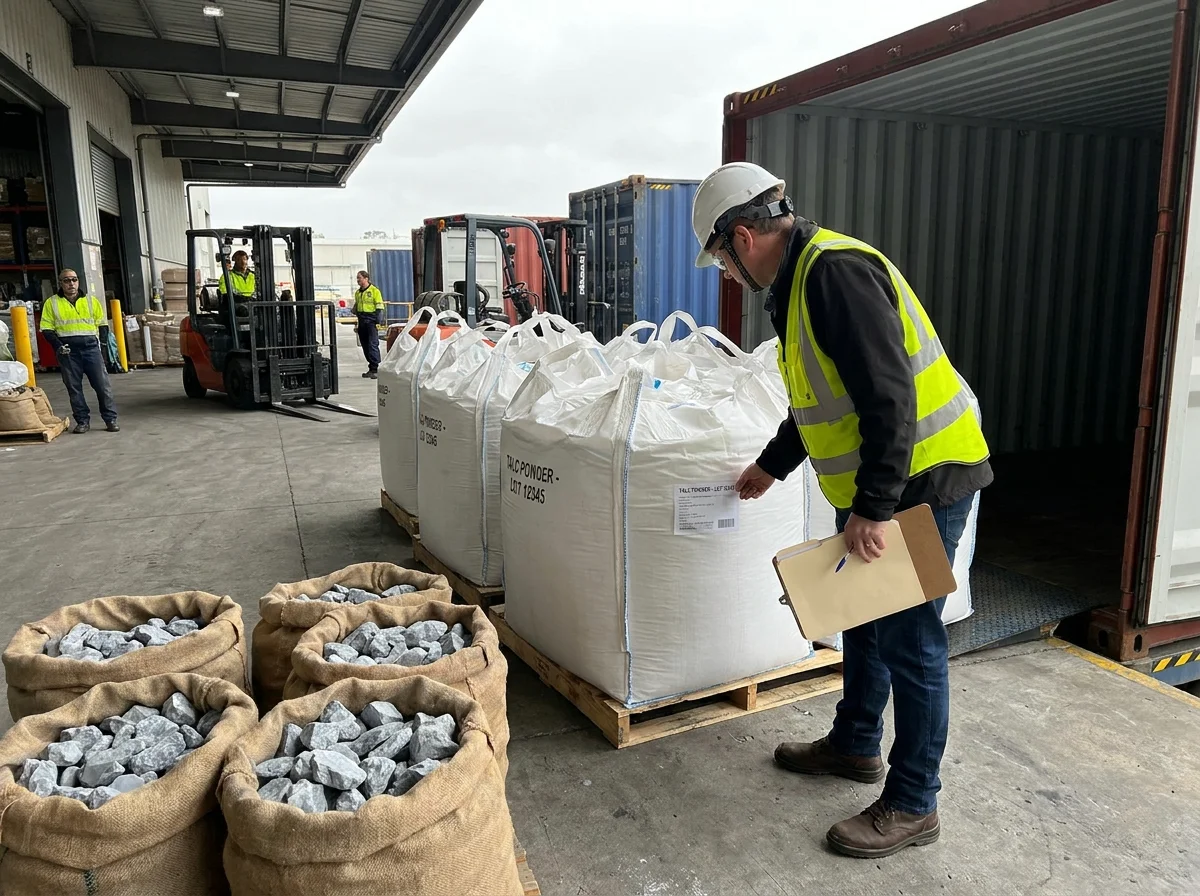
Step 8: Get Documents and Customs Right
A typical shipment needs a commercial invoice, a packing list and a transport document, plus any test or inspection reports required by the contract. Some destinations also ask for a certificate of origin. Soapstone and talc fall under heading 2526 of the Harmonized System, with separate subheadings for uncrushed material and for crushed or powdered material. The World Customs Organization maintains the six-digit system used by more than 200 countries and economies, so confirm the exact national code with your customs broker and keep the product description identical across every document.
In Pakistan, exporters declare shipments electronically. The Pakistan Single Window offers a Single Declaration for exports, so clearance information is submitted once rather than separately to different agencies.
Step 9: Arrange Shipping and Check the Cargo on Arrival
Daa Minerals says it reviews Karachi Port, Port Qasim and Gwadar for each shipment, with routing subject to cargo, carrier availability and agreement. Its Operations and Supply Chain page explains how it coordinates storage, inland movement and export documentation. On arrival, sample the delivered lot, compare it with the pre-shipment report and record any discrepancy immediately, since claims often carry time limits.
Costly Mistakes Bulk Buyers Make
The most common errors are buying “soapstone” without defining the grade, accepting a colour description instead of a measured result, skipping asbestos testing where the end use calls for it, leaving the sampling method undefined, and negotiating price before the specification is fixed. Each is cheap to avoid before the order and expensive to fix afterwards.
Ready to Scope Your Order?
Share your intended use, form, whiteness target, fineness, quantity, packaging and destination through the Daa Minerals contact page. The company lists soapstone and talc in its mineral portfolio, and you can also submit a requirement through DaaTrade.
Final Thoughts
A dependable bulk soapstone purchase rests on preparation: a precise specification, independent testing, written terms and payment tied to evidence. Follow those four steps in order and the practical work of shipping and customs becomes routine rather than risky.
Bulk Soapstone Buying: Frequently Asked Questions
Should I start with a trial order?
Where availability allows, yes. A trial lot lets you test the material, the documents and the communication before committing to volume.
Who pays for testing?
That is a commercial term. Agree it in advance, including who covers retesting if results are disputed.
Can I buy lumps and powder together?
Possibly, but preparation depends on the source and equipment. State every form you need in your first enquiry.
What should I check when the cargo arrives?
Sample the delivered lot, compare it with the pre-shipment report and your specification, and document any difference straight away.