How to Buy Silica Quartz in Bulk from Pakistan: A Step-by-Step Buyer's Guide
Buyers who want to buy silica quartz in bulk from Pakistan rarely struggle to find someone willing to sell. The harder part is turning an enquiry into a shipment that matches what was agreed, arrives on time and comes with paperwork that clears customs. This guide follows the purchase in the order it actually happens, from writing the requirement to receiving the cargo, and highlights the decisions that most affect the outcome.
Step 1: Define Your Requirement Before Contacting Suppliers
A bulk order starts on your side of the desk. Suppliers can only quote accurately when they know what the material must do, so decide the following first:
• Application. Glass, ceramics, foundry or another industrial use.
• Chemistry. Minimum SiO₂ and the maximum limits for impurities that matter in your process, such as iron.
• Form and size. Lump, crushed or ground, with a size range and a tolerance for fines.
• Moisture and appearance. Maximum moisture and any limits on visible contamination.
• Quantity. A trial lot, a single shipment or a recurring programme.
• Packaging and destination. Bag type, loading method and the port where you receive the cargo.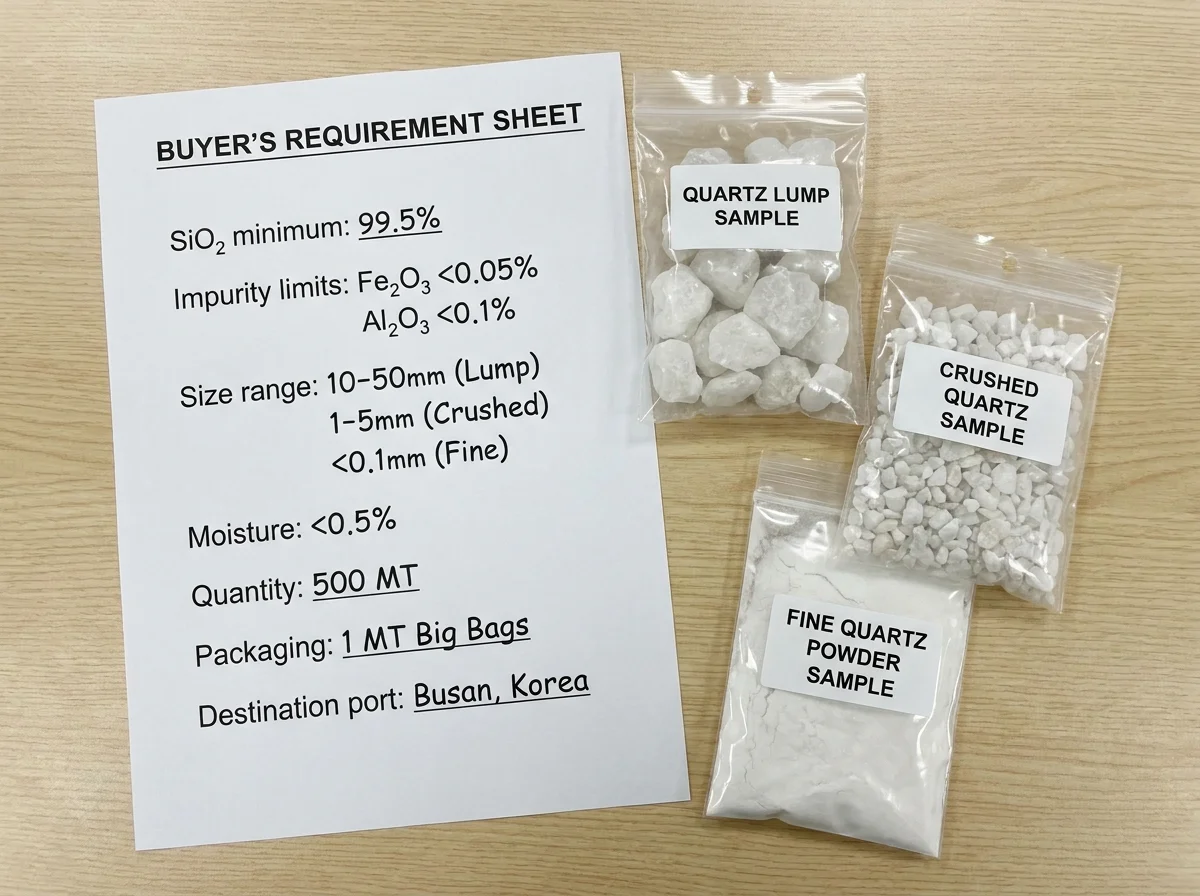
Quality words alone do not help. The U.S. Geological Survey defines high-purity quartz as material with under 100 parts per million of total impurities, equal to at least 99.99% silica. That is a measured limit. If a seller promises "high purity" or "premium grade" without a number, ask for the figure and the laboratory that produced it.
Step 2: Select the Right Kind of Supplier
Different sellers bring different strengths. Source-linked producers know the deposit well, processors offer prepared forms, traders can aggregate larger volumes, and export coordinators connect requirements with sources, preparation partners, testing providers and logistics. None is automatically best. The right choice depends on how much preparation you need and how much of the supply chain you want to manage yourself.
Daa Minerals Limited works as an export coordinator. It describes its role as requirement review, sourcing, preparation coordination, packaging, documentation and shipment support within a written commercial scope. It also states that availability, grade, pricing and timing depend on source review and written agreement, which is a realistic way to frame any bulk supply discussion.
Step 3: Ask for Evidence Instead of Promises
Before sampling, put the same questions to every supplier you consider. Who owns the material and who prepares it? Where does it come from, and will the source stay stable? Which lab reports exist, who issued them and which method was used? How will the sample relate to the production lot? A supplier who answers plainly and in writing is usually easier to work with once the contract is signed.
Step 4: Sample First, Then Test Independently
Treat the supplier's sample as a starting point, not as proof. Agree on a sampling basis, send a representative portion to an independent laboratory and test it against your limits. For larger or recurring orders, add inspection of the actual lot before loading.
Daa Minerals says on its Quality and Certifications page that it can coordinate sampling, third-party testing and independent inspection when requested and agreed, while the testing provider issues its own findings. Its site names SGS, Intertek and PCSIR among the testing and inspection options. Whoever you use, write the test method and acceptance limits into the contract so that results are not open to interpretation.
Step 5: Put Commercial Terms in Writing
A bulk contract should leave very little to assumption. At a minimum, cover:
1. The specification, test method and acceptance limits
2. Quantity, tolerance and shipment schedule
3. Packaging, marking and lot identification
4. Price basis, currency and quotation validity
5. Delivery term and named port
6. Payment terms and any staged release
7. What happens if a lot fails testing, including who pays for retesting
For the delivery term, use the International Chamber of Commerce's Incoterms rules, which clarify who handles tasks, costs and risks as goods move from seller to buyer. Writing "shipping included" is not enough. Name the term and the port.
Step 6: Match Your Payment Plan to Verification
How you pay should follow how you verify. Large prepayments before any testing leave you with little recourse if the material disappoints. Many buyers prefer to link payment stages to milestones such as successful sample testing, pre-shipment inspection and presentation of shipping documents. The right method depends on your bank, your risk tolerance and the supplier's terms, so discuss it openly at the quotation stage, not at the last minute.
Step 7: Prepare Customs and Shipping Documents
A typical shipment needs a commercial invoice, a packing list and a transport document, plus any test or inspection reports the contract requires. Some destinations also ask for a certificate of origin. Check your own import rules before ordering.
In Pakistan, exporters declare shipments electronically. The Pakistan Single Window offers a Single Declaration for exports, so clearance information is submitted once instead of separately to different agencies. For classification, the Harmonized System uses a six-digit code shared by more than 200 countries and economies. Quartz, other than natural sands, generally falls under heading 2506. National codes do differ after the sixth digit, however, so confirm the exact code with your customs broker and keep the description consistent across every document.
Step 8: Arrange Logistics and Plan the Receiving Process
Karachi Port, Port Qasim and Gwadar are the sea gateways Daa Minerals says it reviews per shipment, with final routing subject to cargo, carrier availability and agreement. Its Operations and Supply Chain page explains how storage, inland movement, packaging and documentation are coordinated.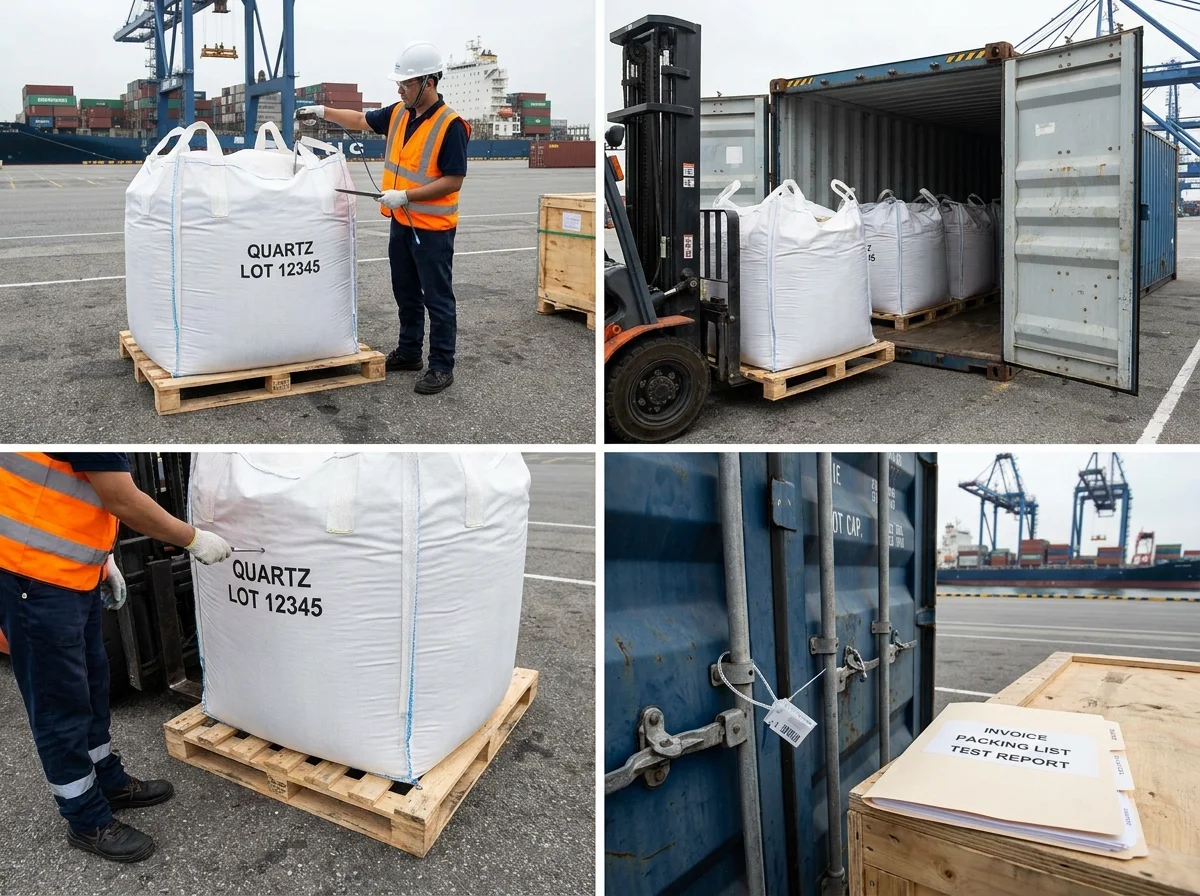
At your end, decide in advance how the cargo will be received. Take an arrival sample from the delivered lot, compare it with the pre-shipment report and record any discrepancy immediately, since contract claims often have time limits.
Safe Handling When the Cargo Arrives
Quartz is stable in sealed packaging, but crushing, grinding and handling can release respirable crystalline silica dust. OSHA explains that breathing this fine dust can lead to silicosis, lung cancer, COPD and kidney disease. Ask the supplier for a safety data sheet and make sure your site has the dust control and protective equipment that local rules require.
Costly Buying Mistakes and How to Prevent Them
Several errors appear again and again. Buyers accept a purity claim with no number behind it. They test only the supplier's sample and not the shipped lot. They leave sampling methods undefined, so two laboratories disagree. They negotiate price before the specification is fixed, so cheaper offers turn out to describe different material. Avoiding these usually comes down to writing more down before the order, not after.
Where to Begin
If you are ready to scope a purchase, review the Daa Minerals silica quartz page and send your specification, quantity, form, packaging and destination through the contact page. You can also submit a buying requirement via DaaTrade, part of the Daa Group.
Final Thoughts
A successful bulk purchase depends on preparation more than negotiation. Define the specification in numbers, verify with an independent lab, document every term and tie payment to evidence. Buyers who follow that order usually find that the rest, from shipping to customs, becomes routine.
Frequently Asked Questions
Should I start with a trial order?
For a new supplier, yes, where availability allows. A trial lot lets you test the material, the documentation and the supplier's communication before committing to volume.
Who pays for testing?
That is a commercial term. Agree it in advance, including who pays for retesting if results are disputed.
Do I need an independent inspector at loading?
It is optional but common for larger orders. Daa Minerals says it can coordinate independent inspection when requested and agreed.
Can I buy quartz in lumps and powder from the same supplier?
Possibly, but preparation depends on the source and available equipment. State the forms you need in your first enquiry.