
Silica Quartz from Pakistan: Quality Standards, Grades, Applications and Export Markets
Silica quartz from Pakistan draws interest from glassmakers, ceramic producers, foundries and traders seeking an alternative source of industrial quartz. Yet the phrase covers a wide range of material, and two lots sold under the same name can behave very differently in a furnace or a kiln. This article explains what determines quality, how grades should be read, where quartz is used and how export markets approach Pakistani supply, so you can judge an offer on its merits.
What Qualifies as "Silica Quartz"
Quartz is crystalline silicon dioxide (SiO₂). When traders say silica quartz, they usually mean lump, crushed or ground quartz sold as an industrial raw material, as opposed to quartz crystals sold for jewellery or collecting.
The U.S. Geological Survey separates silica into distinct categories: industrial sand and gravel, high-purity quartz, industrial quartz crystal, special silica stone and tripoli. The split is a useful reminder that "silica" is a family, not a single product. Most buyers of Pakistani quartz are looking at the industrial lump or crushed end of that family, not at the ultra-pure material used in semiconductor applications.
Key Quality Parameters That Determine Performance
Quality is not one number. It is a set of measurements that together show whether a lot suits a process.
Chemistry. The SiO₂ percentage is the headline figure, but impurities often matter more. Iron, aluminium and other elements can influence colour, melting behaviour or the properties of the finished product, depending on the industry.
Physical form and size. Lump size, crushed size range and fineness determine how the material is fed into a process. A supplier should state the size range and how much fine material is acceptable.
Moisture and cleanliness. Moisture affects weight, handling and flow. Visible contamination such as clay, rock fragments or discolouration is a quick indicator of how well the material was sorted and washed.
Consistency. A good analysis from one lot proves little if the next lot differs. Buyers of recurring supply should ask how the source and preparation stay stable.
Source and lot variation is real, so no general statement about "Pakistani quartz" can replace a test on the actual material. Daa Minerals is open about this on its site: it states that grade, quality profile and availability remain subject to source review, and that final technical suitability rests with the buyer.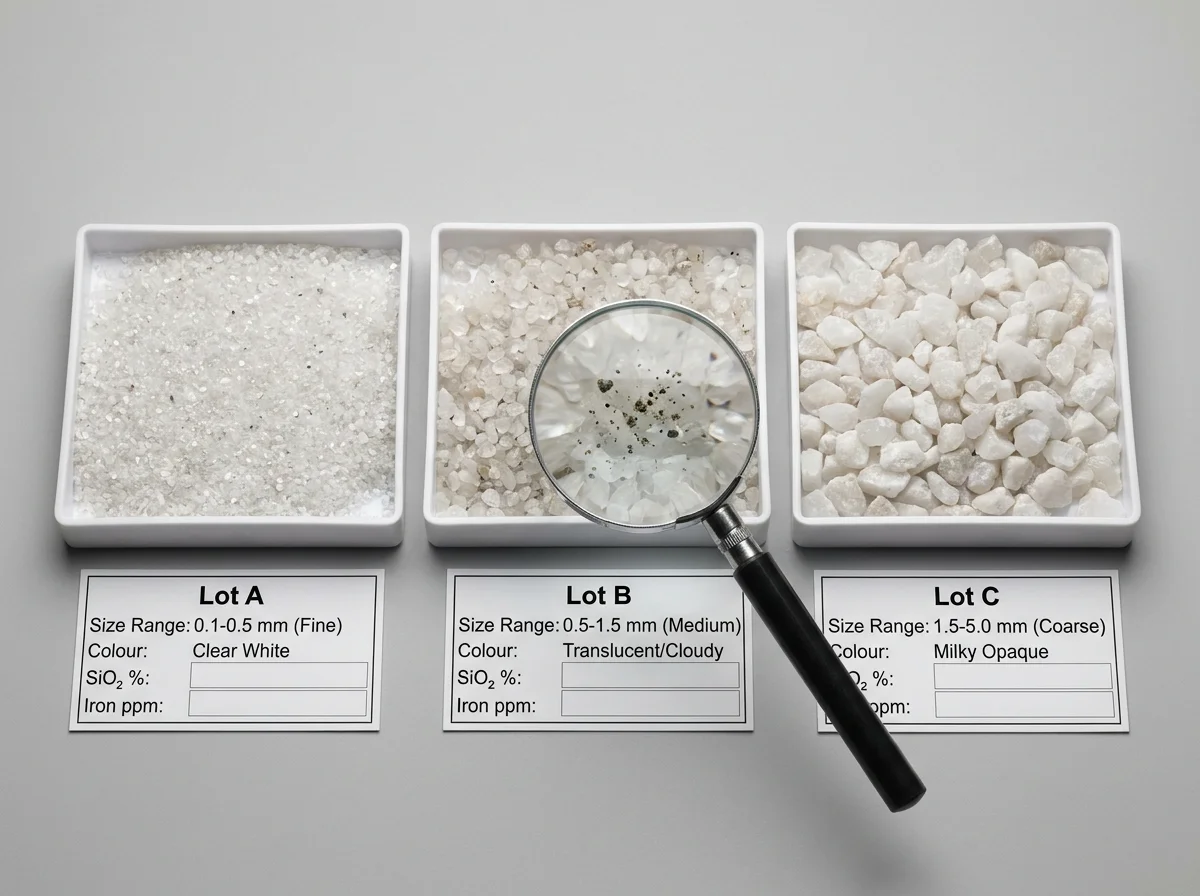
Reading Grades Beyond the Label
Buyers often ask for the "grade" of Pakistani silica quartz as though a universal grading scheme existed. No single standard is followed by every supplier, and names such as "premium" or "A grade" mean whatever the seller decides. A grade is only meaningful when it is written as a specification.
A workable grade definition includes:
• Minimum SiO₂ content and the test method used
• Maximum limits for named impurities
• Form and size range, with tolerance for fines
• Maximum moisture
• Packaging and lot identification
To see how much one word can hide, consider the USGS description of high-purity quartz as material with under 100 parts per million of total impurities, equivalent to at least 99.99% silica. That is a measured threshold, not an adjective. When a quotation uses a quality word, ask for the number behind it, and ask which laboratory produced the figure.
Daa Minerals frames its approach as buyer-defined: its site describes reviewing quartz for chemistry, colour, impurities, lump size, crushed sizing or powder preparation according to what the buyer needs. In practice, your specification sets the grade rather than a fixed catalogue.
Main Industrial Applications of Silica Quartz
Quartz serves several industries, and each pays attention to different properties.
Glass Manufacturing
Glassmakers use silica as the primary glass-forming ingredient. For colour-sensitive products, impurity control, especially of iron, is a priority.
Ceramics and Related Products
Ceramic manufacturers use quartz in bodies and glazes, where chemistry and fineness influence firing behaviour and the final surface. OSHA notes that crystalline silica is used to make products such as glass, pottery, ceramics and bricks, which shows how widely it features in manufacturing.
Foundry and Industrial Use
Foundries work with silica materials in moulding and related processes, where grain size and consistency between shipments are the main concerns. Daa Minerals lists glass, ceramics, foundry and industrial use as the main contexts in which its quartz may be reviewed.
Keep in mind that stated uses are possible applications, not guarantees. The buyer should confirm suitability through its own trials.
Health and Safe Handling
Quartz is safe to store and ship in sealed packaging, but cutting, crushing and grinding can release respirable crystalline silica dust. OSHA explains that inhaling this fine dust raises the risk of serious illnesses, including silicosis, lung cancer, COPD and kidney disease. Buyers who process the material should request a safety data sheet and put dust controls in place at their own facilities.
Pakistani Quartz in Export Markets
Pakistan's export position in quartz is best described with caution. Reliable, current public data on quartz-specific export volumes or destination shares could not be found, so this article quotes none. What can be said is how exporters approach markets.
Daa Minerals outlines four enquiry focus areas on its Global Markets page: the Middle East, East and South Asia, Europe, and Africa and emerging markets. The company presents these as buyer-enquiry categories, not as confirmed volumes or guaranteed routes. Each region tends to stress something different. Buyers in Europe often emphasise chemistry, traceability and documentation, while project-led buyers elsewhere may focus on bulk supply and delivery planning.
For customs, the Harmonized System offers a common six-digit classification used by more than 200 countries and economies. Quartz, other than natural sands, generally falls under heading 2506, but national tariff lines and requirements differ, so confirm the classification with your customs broker.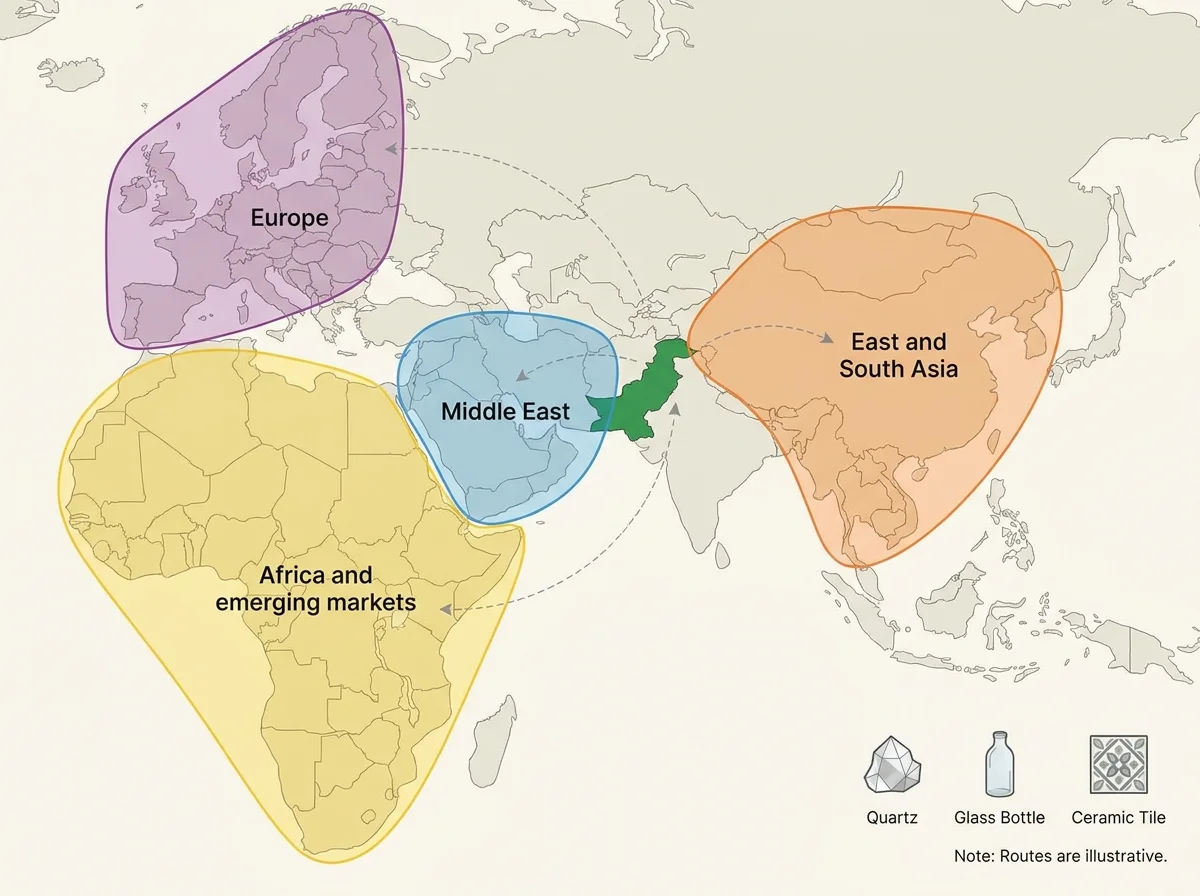
How to Assess a Silica Quartz Offer from Pakistan
Start with a written specification and request a sample. Have an independent laboratory test it against your limits, and agree the sampling method so results can be repeated. Ask who prepares the material, how lots are identified and how documentation is handled. Daa Minerals explains on its Quality and Certifications page that it coordinates third-party testing and inspection when requested and agreed, while the independent provider issues its own findings.
Send an Enquiry
To discuss a requirement, begin with the Daa Minerals silica quartz page, then send your target specification, form, quantity, packaging and destination through the contact page. You can also submit a buying requirement on DaaTrade, part of the Daa Group.
Final Thoughts
Silica quartz from Pakistan is best judged the way any industrial mineral should be: by numbers, evidence and fit for your process. Define your grade as a specification, test the actual material, and treat market claims as starting points for questions. Buyers who work this way tend to find that quality discussions become clearer and supply relationships more dependable.
Frequently Asked Questions
Is there a standard grading system for Pakistani silica quartz?
Not one that all suppliers share. Grades are best defined in a written specification covering SiO₂, impurities, size, moisture and packaging.
Which industries use silica quartz?
Glass, ceramics and foundry work are the most common contexts, with other industrial uses depending on the specification. Buyers should confirm suitability through their own trials.
Does Daa Minerals test the quartz itself?
No. It states that it does not operate a laboratory and coordinates independent third-party testing or inspection when requested and agreed.