
Soapstone Export from Pakistan: A Complete Buyer's Guide for International Importers
International buyers asking about soapstone export from Pakistan often use the word loosely. Some want carving stone, others want industrial talc for ceramics, paints or plastics, and a few want material for fillers. These are different purchases with different specifications. This guide explains what soapstone is, how it relates to talc, what to define before ordering, how quality and safety are checked, and how an export shipment is handled from Pakistan.
Soapstone, Steatite and Talc: Understanding the Terminology
The U.S. Geological Survey explains that talc is a hydrous magnesium silicate. A massive talcose rock is called steatite, and an impure massive variety is known as soapstone. In trade the names overlap, and Pakistani suppliers often list "soapstone/talc" together.
That overlap creates risk. A buyer who needs high-whiteness industrial powder will not be satisfied by darker, impure soapstone, and a buyer who wants stone blocks for carving does not need a ground filler. Begin every enquiry by stating exactly which use you mean.
Industries and Uses for Soapstone and Talc
USGS identifies ceramics, paint, paper and plastics as the major markets for talc, and it points to properties such as softness, whiteness, chemical inertness, lustre and oil and grease adsorption as the reasons for its use. Daa Minerals similarly lists ceramics, paint, plastics and industrial fillers as contexts in which its soapstone and talc may be reviewed. Whether a lot suits your process still has to be confirmed through your own testing, as the buyer remains responsible for technical acceptance.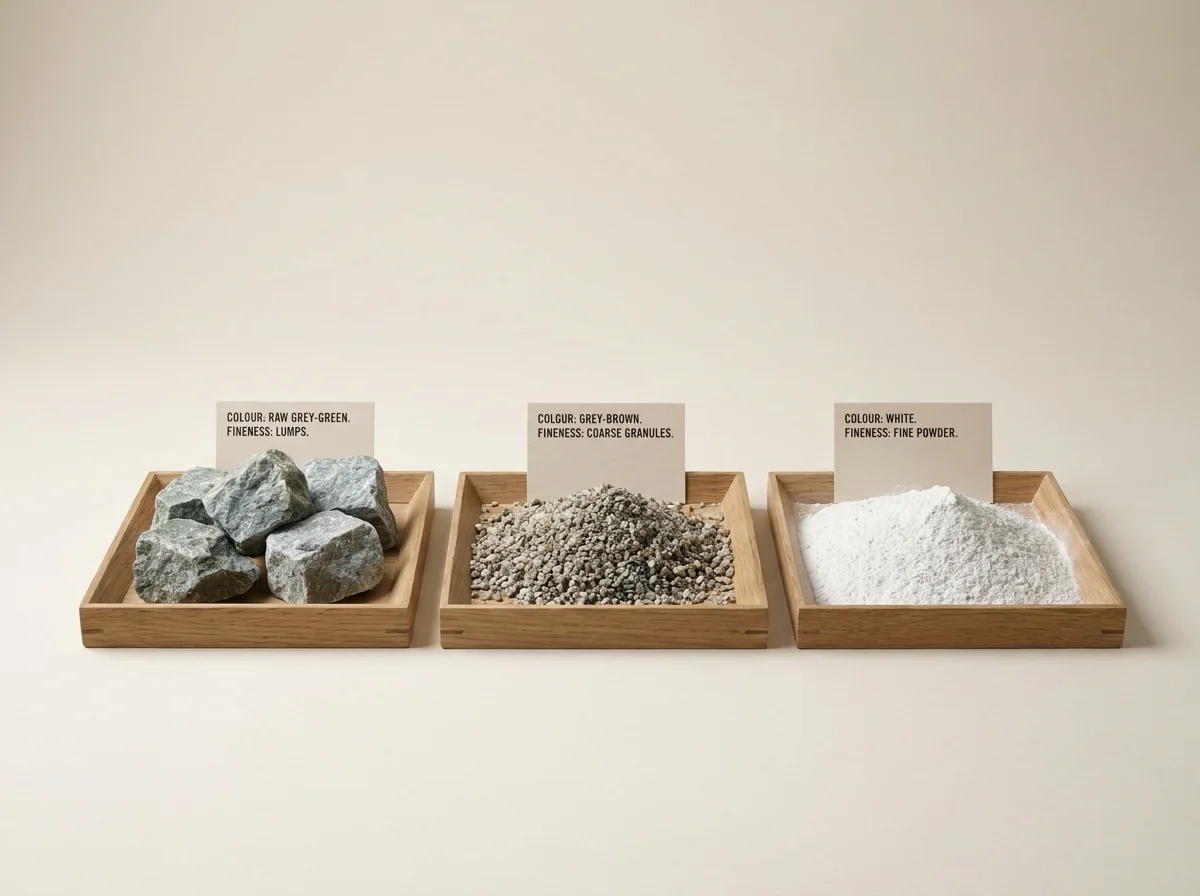
Specifications to Define Before You Send an Enquiry
Because the material varies by source, a good enquiry names the parameters that matter. Daa Minerals describes reviewing natural lumps, crushed material or powder around colour, whiteness, composition, impurities, moisture and buyer-defined fineness. Use the same framework.
Parameter | What to state | Why it matters |
Form | Lump, crushed or powder | Defines preparation and handling |
Colour and whiteness | Target appearance and any measurement method | Affects finished product look |
Composition | Required chemistry and permitted impurities | Determines suitability for the process |
Fineness | Particle size or sieve range for crushed and ground grades | Controls performance as a filler |
Moisture | Maximum level | Affects weight and flow |
Contaminants | Limits for visible rock, grit or discolouration | Quick first check on arrival |
Packaging | Bag type, weight and marking | Drives loading and storage |
Evidence | Test method and independent report | Sets the acceptance standard |
Quality Testing and the Asbestos Question
Talc buyers should pay special attention to safety. The U.S. Food and Drug Administration notes that talc and asbestos are both naturally occurring minerals that may be found close together in the earth. Unlike talc, asbestos is a known carcinogen when inhaled, so the agency says it is important to choose mining sites carefully and test the ore sufficiently. That statement appears on the FDA's talc information page.
For an international buyer, this has practical consequences. If your end use involves cosmetics, personal care or other regulated products, check what your destination country requires and ask the supplier whether the material has been tested for asbestos by a qualified laboratory, with the method stated in the report. Even for industrial uses, many buyers include it in their specification. Do not accept a verbal assurance in place of a report.
More generally, ask that any laboratory result name its issuer, sample, date and method. Daa Minerals explains on its Quality and Certifications page that it coordinates independent testing and inspection when requested and agreed, while the provider issues its own findings. It does not operate a laboratory itself, so agree the testing scope and provider in writing.
Preparing Soapstone for Export
Preparation depends on what you order. Raw lumps may only need sorting and packing. Crushed or ground grades require sizing and milling, and the available equipment depends on the source and the processing partner. Daa Minerals says preparation such as sorting, sizing, grinding and packaging may be coordinated where available and agreed, and that availability, grade and timing remain subject to source review and written agreement. Treat any promise that a supplier can deliver every form from every source with caution.
HS Code and Customs Classification
Soapstone and talc fall under heading 2526 of the Harmonized System, which covers natural steatite, whether or not roughly trimmed or merely cut into rectangular blocks or slabs, and talc. Within that heading, uncrushed material and crushed or powdered material have separate six-digit subheadings (2526.10 and 2526.20). The World Customs Organization maintains the six-digit system used by more than 200 countries and economies. National tariff lines and duty rates vary after the sixth digit, so confirm the exact classification with your customs broker and keep the description identical across the invoice, packing list and declaration.
The Export Process from Pakistan, Step by Step
1. Define the use and specification. Carving stone, industrial lumps, crushed grade or powder.
2. Request samples and test independently. Agree on the sampling basis and test method, including any asbestos testing your use requires.
3. Agree commercial terms in writing. Specification, quantity, packaging, price basis, delivery term and payment.
4. Prepare and pack. Sizing, milling if required, packing and lot marking.
5. Inspect and load. Optional independent inspection before shipment.
6. Declare and ship. Pakistani exporters file customs information through the Pakistan Single Window, which offers a Single Declaration for exports.
7. Receive and verify. Compare an arrival sample with the pre-shipment report.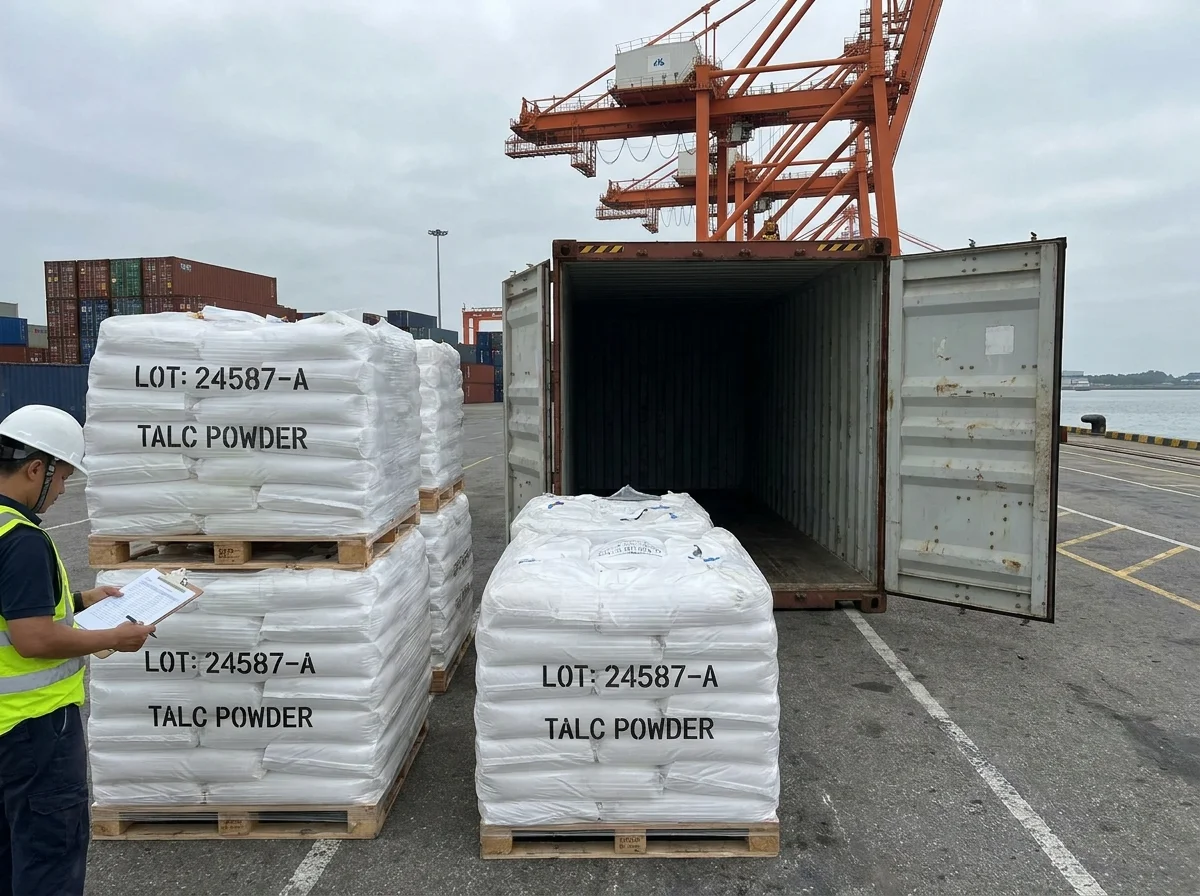
For delivery terms, the ICC's Incoterms rules set out who handles tasks, costs and risks between seller and buyer, so name the term and the port in your contract. Daa Minerals says it reviews Karachi Port, Port Qasim and Gwadar per shipment, with routing subject to cargo, carrier availability and agreement. Its Global Markets page describes how enquiries from different regions are handled.
Packaging and Storage Considerations
Fine powder is sensitive to moisture and rough handling, so agree bag type, weight and marking before preparation begins. Lumps are more forgiving but should be kept free of contamination. Storage conditions at both ends affect caking and dust, which in turn affect your arrival sample.
Common Problems and How to Avoid Them
The most frequent difficulties are mixing up soapstone and industrial talc, accepting a colour description in place of a measured result, skipping asbestos testing where the end use calls for it, and leaving sampling methods undefined. Each is solved by writing the requirement more precisely before the order.
Start Your Soapstone Enquiry
When you are ready to discuss a requirement, send your target form, colour or whiteness, fineness, quantity, packaging and destination through the Daa Minerals contact page. Daa Minerals also lists soapstone and talc as a product category in its mineral portfolio, and you can submit a buying requirement through DaaTrade.
Final Thoughts
Soapstone export from Pakistan works best when the buyer is specific about the material, the test evidence and the delivery terms. Be clear whether you want stone or industrial talc, define whiteness, fineness and impurity limits, test independently and settle the paperwork in advance. That discipline protects both sides and makes repeat orders far easier.
Frequently Asked Questions
Is soapstone the same as talc?
They are related. USGS describes soapstone as an impure massive variety of talcose rock, while commercial talc usually implies a purer material. State your intended use to avoid confusion.
Do I need asbestos testing?
It depends on your end use and destination rules. The FDA notes that talc can occur near asbestos, so many buyers, especially for cosmetics or personal care, ask for independent test reports.
Which HS code applies to soapstone?
Heading 2526 covers natural steatite and talc, with separate subheadings for uncrushed and for crushed or powdered material. Confirm the national tariff line with your customs broker.
Can soapstone be supplied as lumps and powder?
Possibly, depending on the source and available processing. Daa Minerals says preparation is coordinated where available and agreed.