Antimony Ore Export from Pakistan: A Practical Guide for International Buyers
Antimony has moved from a niche industrial metal to a strategic one. It is used in flame retardants, lead-acid battery alloys, ammunition and electronics, and the supply chain behind it is concentrated in very few countries. As governments and manufacturers look for alternative origins, Pakistan keeps appearing in the conversation. A Financial Times report, summarised by Profit, says Pakistan produces a limited quantity and holds roughly 1% of known global reserves, while industry experts quoted in the same piece dispute that figure and believe the real potential is larger.
Interest and reality are not the same thing, so buyers need a sober view before they commit time and money. This guide, published on DaaTrade, explains where Pakistani antimony ore comes from, what is actually exported, how to read grade claims, and how to prepare an enquiry for Daa Minerals Limited.
Where Pakistani Antimony Comes From
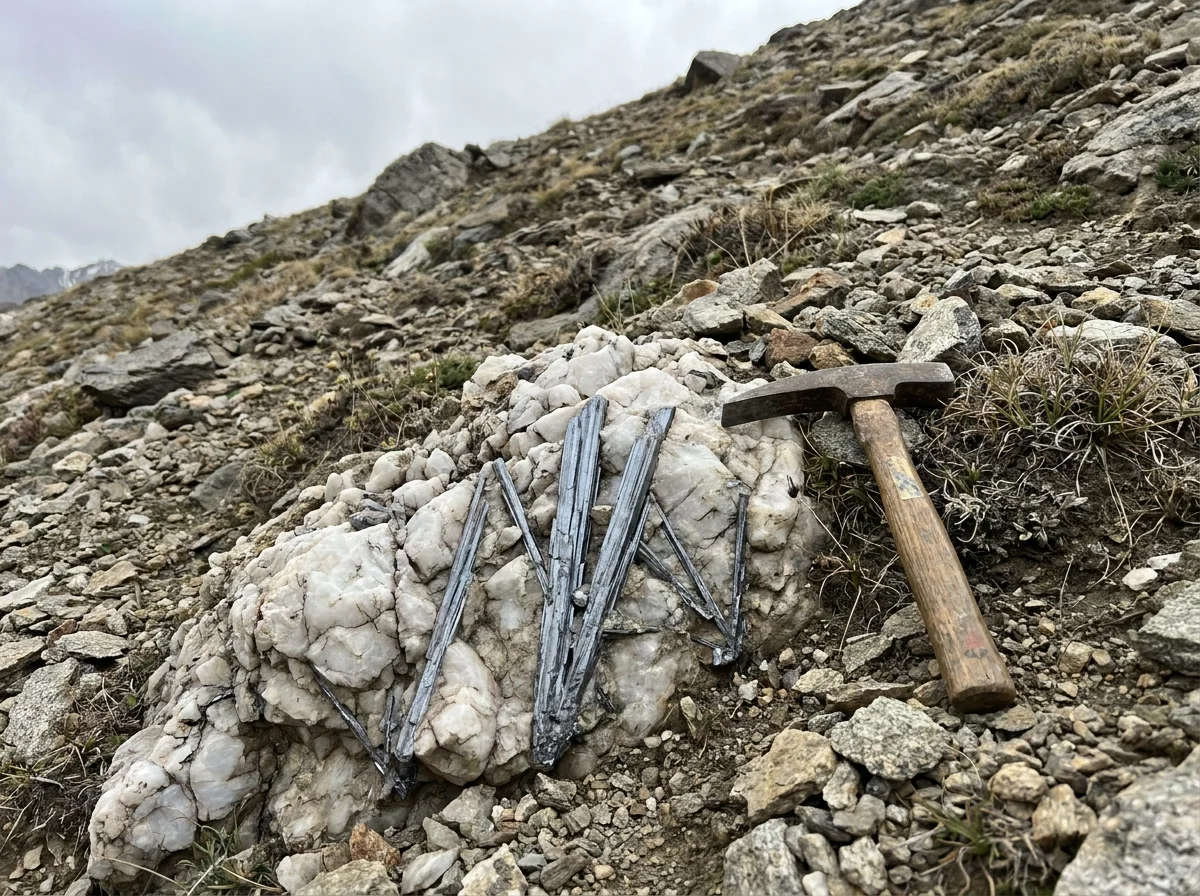
Stibnite (antimony sulphide) is the main antimony mineral in Pakistan. Stibnite occurrences have been documented in the north, including the Krinj area of Chitral, where an Austrian geological study describes the Krinj antimony mineralisation. PCSIR researchers have also worked on low-grade Chitral stibnite ore, upgrading it by froth flotation to a concentrate of 62% antimony with 95% recovery.
More recently, Pakistan's Special Investment Facilitation Council announced that antimony had been discovered in Balochistan, and Arab News reported that exploration blocks in Killa Abdullah and Zhob were involved. Announcements of discoveries are not the same as bankable, exportable volumes, however, and buyers should treat them as context rather than proof of supply.
What Is Actually Exported
Most antimony leaving Pakistan is raw ore or low-grade concentrate rather than refined product. The FT report notes that Pakistan remains largely at the raw-material stage, with little domestic refining and global processing concentrated in China. A Pakistani mining veteran quoted by Business Recorder goes further, saying much raw antimony from north-western artisanal mines ends up with Chinese buyers at Karachi, often well below market rates.
For an international buyer, this has two practical consequences. First, material form matters: ore, hand-sorted lump, flotation concentrate and processed material are different products with different prices and different uses. Second, provenance matters: you should know who mined the material, under what licence and how it moved before reaching the exporter.
Reading Grade Claims Carefully
Pure stibnite contains about 71.7% antimony by weight so that no antimony ore can contain more than that as metal. When a supplier quotes a number above that ceiling, it must refer to something else, such as stibnite (Sb2S3) content, and you should ask exactly which parameter and test method it describes.
Daa Minerals' company profile lists antimony ore with purity "up to 94% with processing". That wording signals a processed outcome rather than a guarantee for any lot, and the company's website adds that antimony enquiries are discussed around grade, mineral form, impurities, sizing and third-party verification, with specifications defined by the buyer. Ask in writing what the figure measures, which processing is assumed and which lot it refers to.
The Export Pathway
Daa Minerals describes itself as a Pakistan-based mineral sourcing and export coordination company. Its operations and supply chain approach runs through requirement review, source review, preparation and verification, and documentation and shipment planning. Sorting, sizing, grinding and packaging may be coordinated where suitable providers are available, and Karachi, Port Qasim and Gwadar are named as ports that may be reviewed depending on cargo and carrier availability.
On the regulatory side, exporters operate within customs and foreign-exchange rules. The Trade Development Authority of Pakistan publishes a guide for new exporters, and the State Bank sets requirements on export proceeds in its foreign exchange manual. A supplier who cannot explain how these apply to your shipment is not ready to export.
Verification Is Not Optional
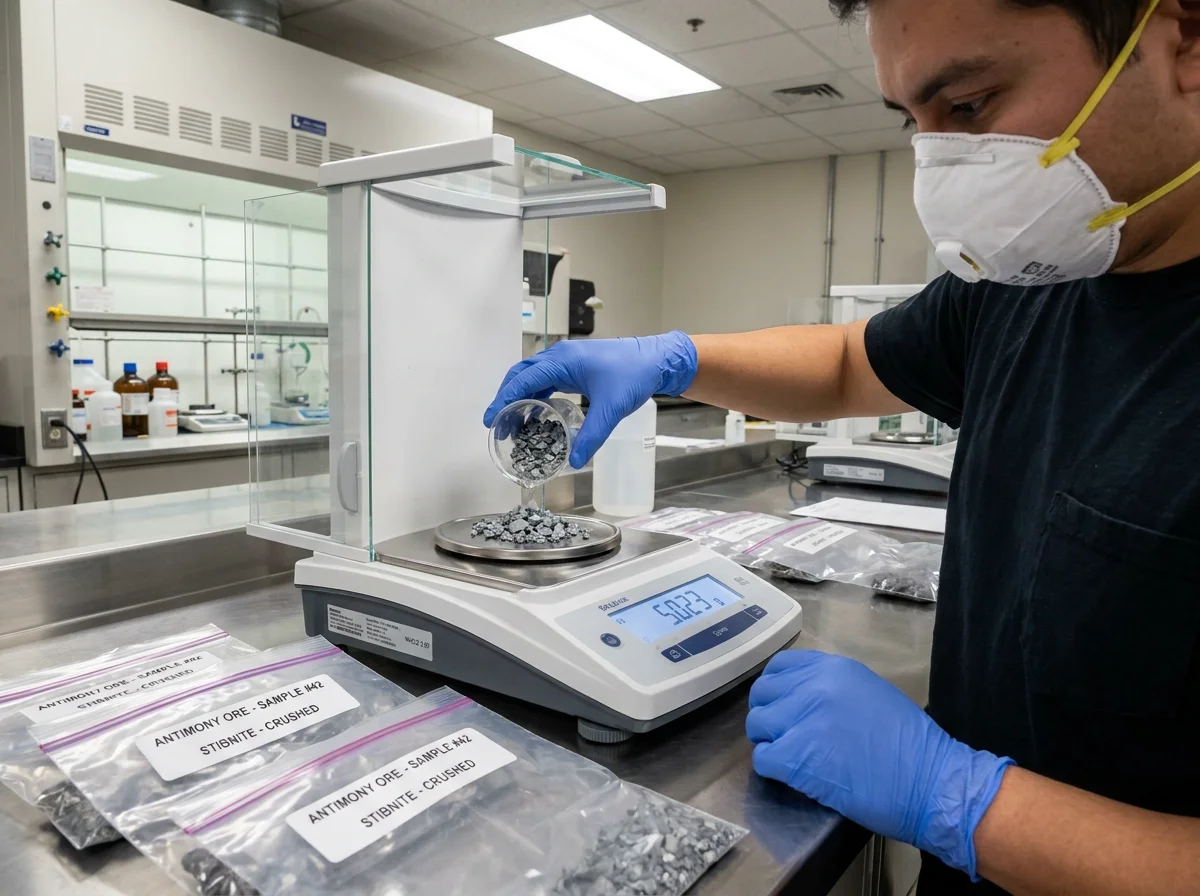
Antimony trade relies on assay results, and the penalty elements in an ore, especially arsenic and lead, can decide whether a buyer's plant can use it. Daa Minerals states that third-party testing or independent inspection can be coordinated when requested and agreed, and its quality and certifications page covers laboratory testing, batch review and export documentation. Reports remain attributable to the laboratory that issues them, and final suitability remains the buyer's decision.
Specify what you need: antimony content, arsenic, lead, iron, sulphur, moisture and particle size, along with the analytical method and the laboratory.
Know Your Compliance Position
Because antimony is classed as strategic or critical by several governments, buyers should check their own import rules, end-use requirements and any sanctions or trade-control obligations before they sign. Responsible suppliers will also expect to understand the end use and destination. Treat that as a sign of seriousness rather than an obstacle.
Preparing a Useful Enquiry
Daa Minerals asks for the mineral, required grade or quality profile, quantity, material form, packaging and destination. A strong enquiry also includes:
Your acceptable range for antimony and your ceilings for arsenic, lead and other penalty elements
Whether you need raw ore, hand-sorted lump or a flotation concentrate
Trial, spot or recurring volume
Packaging preference and destination port
Testing or inspection requirements and the laboratory you prefer
Taking the Next Step
Exporting antimony ore from Pakistan rewards buyers who ask precise questions about grade, provenance and verification. If your business is evaluating Pakistani antimony, review the Daa Minerals antimony ore profile and then send your requirement through the enquiry page, including your target specification, quantity and destination. Daa Minerals can review the requirement against available sources and coordination options, with all terms subject to written agreement.